Wednesday, November 20, 2013

Other Adults Who Strongly Impact Your Child

Teachers, coaches and other adults who work with your children will have a tremendous impact on them. These adults provide your children with different perspectives then you have. Ideally they will play a positive role in guiding your children to grow into their best selves.

Last night I attended a banquet for my son’s high school cross country team. During the banquet, a number of students spoke passionately about just how much their coaches meant to them. These teens expressed beautifully a deep sense of gratitude for the impact these coaches had on their lives.

Each in their own way conveyed similar key messages they received from their coaches:
  • You noticed me.
  • You cared about me.
  • You believed in me when I didn’t believe in myself.
  • You changed my life.
What a gift these coaches have been to our kids.

Tuesday, November 12, 2013

Make Your Home Name-Calling Free

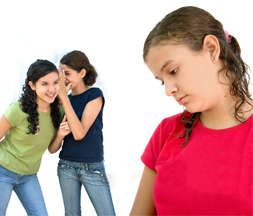
Being called names hurts kids. When kids are called names like stupid, lazy, fat, ugly or cry baby, they naturally feel bad about themselves.

While you can’t control what happens at school, you can make your own home a name-calling free place. Your kids should feel safe in their own home. This means that your kids should not be allowed to treat each other cruelly.

Siblings have inside information that they can powerfully use against each other. As a parent it is your job to stop them from using this information in a negative way. Make your home welcoming for everyone – a place where they can be themselves, be vulnerable and not be afraid of being attacked for showing their true selves.

Thursday, November 7, 2013

Looking to be a Better Mom

A mom emailed me asking for information about the online parenting classes. She concluded saying "I am the mom of a 3 yr old and a 5 yr old (both boys) and am just looking to be a better mom. Tired of power struggles, whining and feeling like a failure. No court order here - just want to raise happy, healthy, self-reliant children and feel like I'm not accomplishing that now."

Ouch! Her honesty took me back to how I felt when our oldest was 3-years-old and really pushing our buttons. I remember her doing something she knew she should not be doing and looking us straight in the eye as she did it. I was furious! I felt like spanking her but I had promised myself not to hit my kids so I needed some other response to correct her behavior.

My husband and I decided to take parenting classes and that was one of the smartest decisions we've made. It was like gaining access to the "cheat sheet" on what works well in raising kids! I started Priceless Parenting so parents everywhere could learn these ideas that make parenting so much easier.

You can learn these ideas by taking one of the self-paced online parenting classes (ages 5 and under, 6 to 12 or teens). If you want to be able to ask me questions on the lessons and get my responses, then you want to sign up for a DANCE Parenting Class. The DANCE class runs for 2 weeks and the next one is Nov. 9 - 22nd. Both formats allow you to watch the lessons at your own time and place.

You should leave the class feeling much more confident in your parenting approach. You will learn how to calmly set firm limits on your children’s behavior, invite cooperation and have a lot more fun together. I’d love to have you in class!

Tuesday, November 5, 2013

Responding to Kids with Compassion Instead of Criticism

Critical comments flow easily for most parents. In fact it may be so natural that you don’t even notice yourself making negative comments. In her book, Building Moral Intelligence, Dr. Michele Borba writes "studies reveal that the average parent makes 18 critical comments to his child for every one positive comment." Yikes!

When you criticize your kids, you are usually trying to correct their behavior or help prevent them from making mistakes. While these are worthwhile goals, what if criticism actually does more harm than good?

Criticizing Kids Teaches Them to Be Self-Critical


A big problem with criticism is that kids tend to quickly internalize it and then repeat it back to themselves. When your kids use negative self-talk, they hold themselves back instead of confidently moving forward.

In her book Self-Compassion: Stop Beating Yourself Up and Leave Insecurity Behind, Professor Kristin Neff writes “When mothers or fathers use harsh criticism as a means to keep their kids out of trouble (“don’t be so stupid or you’ll get run over by a car”), or to improve their behavior (“you’ll never get into college if you keep getting such pathetic grades”), children assume that criticism is a useful and necessary motivational tool. Unsurprisingly, research shows that individuals who grow up with highly critical parents in childhood are much more likely to be critical toward themselves as adults.

People deeply internalize their parents’ criticisms, meaning that the disparaging running commentary they hear inside their own head is often a reflection of parental voices – sometimes passed down and replicated throughout generations.


Being self-critical isn’t exactly the legacy you want to give your kids!

Criticism Comes Easier Than Forgiveness or Compassion

Being critical of your children’s behavior stems from a belief that criticism is necessary in helping them grow up well. When you criticize your kids, you are attempting to exert control over their behavior in order to improve it. Is there a better way to do this?

(finish reading the article on Priceless Parenting)

Thursday, October 24, 2013

Internet Rules for Kids

Access to the internet is integrated into almost every digital device your children may use. While there are various filters and monitoring software you can use to keep their experience healthy and safe, it also helps to have some basic internet rules.

What internet rules do you have for your kids? Some to consider:
  • No drug talk, nudity, drinking pictures, bullying, posting party locations
  • No sharing passwords
  • No participating in sites that allow anonymous posting and comments
  • Turn off location identifier on any pictures that are posted.
  • Use privacy settings. For example, only allow friends to access videos or posts.
  • Ask permission before downloading, installing or buying anything.
  • Add something online only if you are comfortable with parents, teachers and coaches seeing it.
  • All digital devices are turned into parent’s room by ___:___ each night.
  • Limit screen time to ___ hours per day.

Discuss your expectations and the reasons behind the rules. Post the rules in an area where everyone can easily see them.

Plan to have ongoing discussions with your kids about the internet. News stories are a rich source of examples of what can go wrong with kids and technology. Use those stories to discuss important issues with your kids.

Tuesday, October 15, 2013

Getting Your Kids to Talk to You

Touchy subjects can be difficult to approach with your kids in a way that doesn’t scare them away. One mom wrote “I think my daughter might be bullied at school but I can't get her to talk about it.”

When you are nervous or anxious to talk to your child about a sensitive subject, you are likely start off by saying too much. By the time you pause to let your child respond, your child may already feel attacked which was not your intention.

For example, what if the mom who is concerned her daughter might be being bullied says “Honey, I’ve noticed you’ve been kind of sad lately especially after you come home from school. Are those girls being mean to you again? I know they can be really cruel when they get together and that’s just terrible.”

How would you feel right now if you were in this daughter’s shoes? Does it sound like mom might want to get in there and fix the situation? Are you worried she might talk to the girls or their parents?

If mom stopped after saying “Honey, I’ve noticed you’ve been kind of sad lately especially after you come home from school.”, would you have felt differently? By pausing and giving her daughter a chance to respond, she’s inviting her daughter to share her view.

When you want to encourage your kids to talk, try to limit yourself to one sentence and then wait for their response. Listen carefully before saying anything else and you’ll be surprised that your kids are actually talking to you!

Wednesday, October 9, 2013

Increasing Motivation to do Homework

Do your children get their homework done with little or no input from you? If so, consider yourself fortunate! On the other hand, if your children struggle to get their homework done, you may find yourself more involved.

Your role is to assist your child in establishing a good place to do homework and good conditions for working. For example, you might improve the conditions by giving them something to munch on while they are working like hummus and crackers, carrot sticks or strawberries.

How Involved Should You Be in Homework?

Let your child be in charge of requesting your help if needed. Establish times when you are available to help like from 3:00 – 5:00 and 7:00 – 8:00. If you don’t set boundaries, you may find yourself overwhelmed by things like trying to prepare dinner while also helping with homework.

In their book Smart Parenting for Smart Kids, Kennedy-Moore and Lowenthal write "Parents who are actively involved with their children’s homework every night, or who check over their children’s work before they turn it in, are establishing a dangerous pattern. First, they’re creating confusion about whose responsibility the homework really is. Second, they’re cutting off essential feedback that teachers need about what children do or don’t understand on their own. Third, they’re unwittingly criticizing their children’s abilities, implying that what their kids can do alone isn’t good enough to be seen in public. Parents who correct their children’s homework are trying to be helpful, but they’re unintentionally communicating to their children that mistakes are intolerable and must be hidden. This can be particularly harmful for perfectionistic children."

One mom realized she was establishing a dangerous pattern by checking over her daughter’s math homework every night.

(finish reading the article on Priceless Parenting)